
What Counts as 'Hard Work'? (Hint: It’s Not Just Sweating and Suffering)
UPDATE: April 13, 2026 - I’ve created a video version of this article on my YouTube channel if you’d rather watch or listen than read! You can access it at https://youtu.be/eYK8n9g_MNk.
This is an article I first wrote and published on July 30, 2025, and it’s one I’ve found myself coming back to more than once since then, so I published an update to the article content on February 11,2026.
Not because the core idea was wrong, but because experience has a way of sharpening the edges of certain questions. The longer I coach, train, and live inside this work, the clearer it becomes that many people are not failing due to a lack of effort. They are working hard. Often very hard. They are just pouring that effort into places that do not reliably produce the outcomes they want.
That has been especially obvious to me lately.
Coming off a planned deload in my own training, and talking openly about it in the Always Ready series, has brought this question back to the surface: what actually counts as hard work when the goal is long-term progress rather than short-term exhaustion?
So I’ve revisited this piece with fresh eyes. The foundation remains the same, but I’ve updated the language where my thinking has evolved, and added clarity where I see the same misunderstandings show up again and again. Not as a correction, but as a refinement. I’ve also added some more images to brighten it up, and both FAQ and Further Reading sections to help make it a more valuable resource.
If you’ve ever felt like you were doing all the right things and still not getting anywhere, this question is worth sitting with.
What Counts as "Hard Work"? (Hint: It’s Not Just Sweating and Suffering)
You worked hard. You were drenched in sweat. You pushed to the limit. So why aren’t you seeing results?
If you’ve ever asked yourself that, you’re not alone.
I see it constantly. Some people go hard a few times a week and wonder why their body composition hasn’t changed. Others are consistent but chronically fatigued, always sore, always tired, never quite getting faster or stronger. Others get stuck in a loop of impatience, pushing too hard too soon, working around injuries, then flaring those injuries up again because they couldn’t hold back long enough to heal.
And it’s not just in the gym. I see it everywhere. People hammering random high‑intensity workouts, redlining every run, repeating the same routine without progression, or punishing themselves with movement that never actually builds them up. It all feels like hard work. But it doesn’t work the way they want it to.
Because not all hard work is created equal.
We’ve been conditioned to equate discomfort with worth. If we’re not wrecked after a session, it feels like it didn’t count. So when the results don’t line up with the effort we’ve put in, it’s confusing and frustrating. Sometimes it even feels personal, like maybe you’re just not built to succeed.
But the truth is simpler and more hopeful than that.
You might just be working hard at the wrong things.
Working Out vs. Training
Working out is doing things that get you sweaty, breathing hard, and feeling like you did something. That’s not a bad thing. It can be a great stress release or a mental reset, and for many people, that alone is valuable.
But if you want long‑term physical progress, you need more than effort. You need intention.
Training means structure and purpose. It means progressions in load and intensity. It means enough consistency to create real adaptation, and enough variation to avoid burnout or stagnation. It includes periods of skill development, recovery, and yes, even boredom.
That discipline is hard work.
Training also means thinking in longer arcs. Four‑to‑six‑week blocks focused on specific adaptations. One block might emphasise strength, another aerobic capacity, another movement quality or a deliberate deload. These blocks can ladder into quarterly goals or seasonal priorities, whether you’re training for an event or simply trying to feel, move, and function better year‑round.
This is what makes training sustainable. You’re not just working out to burn off last night’s dinner. You’re building something, phase by phase, with clear intent and built‑in recovery. You don’t need to train like an athlete, but you can benefit enormously from thinking like one.
The Appeal of Suffering
There’s a reason so many people chase that crushed, can’t‑walk‑up‑the‑stairs feeling after a session. It offers instant gratification.
A workout that leaves you sweaty and smoked feels like success. It feels earned. But a session that focuses on technique, control, or aerobic efficiency might not feel like much at all in the moment. The payoff comes weeks later, when you move better, lift more, or recover faster.
That payoff only happens if you stay the course.
This doesn’t mean hard or intense sessions are bad. If your main reason for training is stress relief, that’s completely valid. But if your goals include strength, endurance, body composition, or injury resilience, effort alone isn’t enough. You need a plan that allows effort to accumulate in the right direction.
The Trap of Chasing Novelty
Another trap that often masquerades as "hard work" is chasing novelty. It’s easy to get drawn into random WODs found online or to believe that constantly changing your routine will shock your body into results. Terms like “muscle confusion” get thrown around like magic bullets, but in practice, all they usually create is chaos.
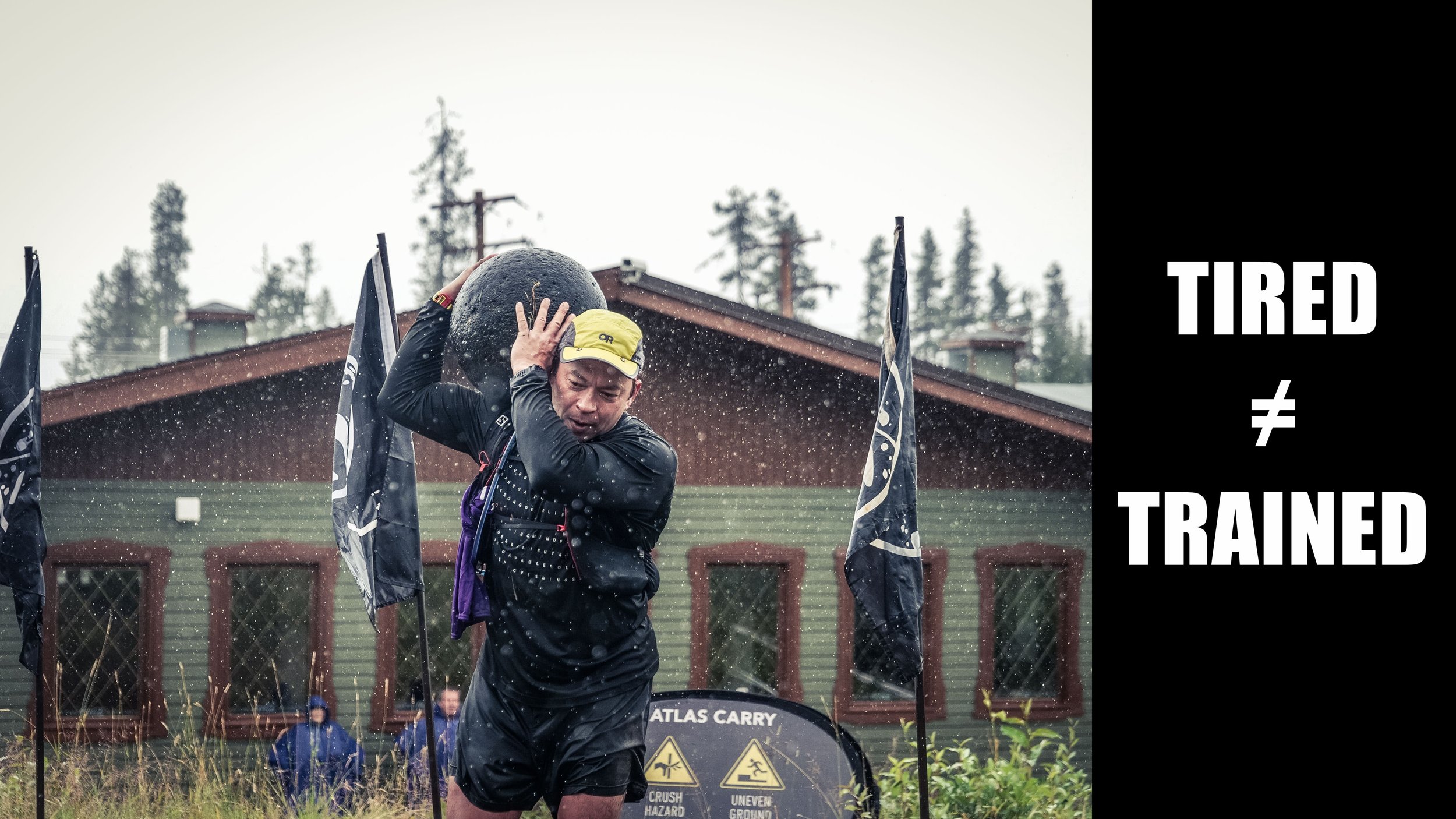
That kind of variety can keep things exciting. But excitement isn’t the same as effectiveness. If you’re constantly doing something new, your body never has the opportunity to adapt, strengthen, and progress. You end up getting tired, but not necessarily better. Tired doesn’t equal trained.
This doesn’t mean you should do the same workout forever. It means variation needs to be strategic, not random. Planned phases of progression. Cycles with a clear purpose. Enough time spent working on the same skill or lift or energy system to let the adaptations actually take hold.
Doing new things is easy. Sticking with the right things long enough to let them work? That’s hard. And that’s where the results come from.
Recovery Is Work
One of the most counterintuitive truths about training is that the growth doesn’t happen during the workout. It happens after.
Training creates intentional damage. It challenges tissues, systems, and structures, but the remodelling happens during recovery. That’s when the body builds itself back stronger.
So if you’re constantly going to the well, hammering session after session without enough sleep, nutrition, or downtime, you’re actually robbing yourself of the gains you could be making.
The hard part? For people who love to push, recovery can feel like wasted time. But recovery isn't just lying on the couch.
It's prioritising 7–9 hours of consistent, quality sleep, not just when you're tired, but as a non-negotiable part of your training.
It's fuelling with enough protein and carbs to repair and rebuild tissue, instead of under-eating and wondering why you're not recovering.
It's being willing to say no to another high-intensity session and yes to low-intensity walks, mobility work, or time on a foam roller. It's recognising that self-care isn't soft - it's strategic.
Recovery doesn’t mean doing nothing. It means doing what’s necessary. And often, it’s the most overlooked piece of real, sustainable progress.
Recovery isn’t a break from the work. It is the work. It’s the part that often gets dismissed because it’s quiet. It doesn’t look like effort, but it’s where the transformation happens. These aren’t passive behaviours, they’re choices that support every bit of hard training you do. Without them, your ability to adapt and improve is limited, no matter how hard you push in the gym.
The Grind Isn’t Always Glamorous
Real progress is rarely exciting.
It’s repeating the same movement patterns with small, steady improvements. It’s tracking loads, managing fatigue, and showing up even when nothing feels new. The hardest work often shows up when motivation is low and results aren’t obvious.
This is where structure matters more than hype. Small, process‑based goals help keep you anchored. Improving range of motion. Executing cleaner reps. Completing the planned session as written, even when it feels dull.
Documenting progress matters here. Without it, improvements are easy to miss. Strength gains, improved efficiency, or better recovery often only become obvious when you look back or deliberately revisit earlier benchmarks.
Progress is usually happening, even when it doesn’t feel dramatic.
The Power of Invisible Effort
Most people equate hard work with being out of breath, but some of the most important work barely registers in the moment.
Dialling in technique. Backing off when something feels off. Fuelling consistently. Planning your week around recovery. Tracking sessions that feel ordinary.
That’s invisible effort, and it compounds.
I’ve seen clients spend weeks refining form or reinforcing fundamentals and feel frustrated that they weren’t “doing enough.” Then the payoff arrives later, often suddenly, in the form of easier movement, pain‑free progress, or confidence under load.
I experienced this myself with running. I was a BIG doubter of the idea that making the majority of my running training "easy" would work. My thinking was: if I wasn't pushing at the kind of efforts or paces that I'd be seeing in my races, how could I be adapting correctly?
But all that "easy" training built skill and awareness of things like my gait, my posture, even small details down to the order in which the parts of my foot hit the ground with each foot strike. It helped me build overall efficiency and running economy, and gave me the aerobic base and mechanical competence that allowed me to push even harder when it counted, without breaking down.
I didn't just get faster - I got better.
This kind of work rarely looks impressive in the moment, but month to month, it builds real capability.
The Discipline of Holding Back
Not every season is about pushing. Sometimes the hardest work is restraint.
It’s doing the easy aerobic work to build your base. It’s sticking with the rehab plan even when your ego wants to go harder. It’s accepting that this chapter might be about maintenance, not maxing out.
That kind of discipline (the mental discipline to do less, or go slower, or focus on the basics) is a different kind of hard. But it’s essential.
Because that’s what builds the foundation you need to push hard later without breaking down. It’s what lets you train for years instead of months. And it’s what carries over into every other area of life.
Holding back isn’t failure. It’s patience applied with intent.

So What Does Count as Hard Work?
It might look like pushing through a tough session. Or stopping short to protect recovery. Logging progress when it feels boring. Scaling back to rebuild properly. Practising the basics. Choosing food that fuels rather than numbs.
If it serves your long‑term goals, it counts.
Hard work isn’t always sweaty or impressive. It’s intentional, consistent, and patient. It’s commitment rather than punishment.
And if you can trust yourself to do the quiet, unglamorous work now, you’ll be capable of far more later.
Doing the Work That Actually Moves the Needle
One of the biggest reasons people get stuck with fat loss is that they confuse effort with effectiveness. They work hard, sometimes very hard, but they are working against the way weight loss actually works rather than with it.
How Weight Loss Really Works is a free mini-course that walks through the fundamentals most people were never taught. Not rules, not meal plans, and not another short burst of motivation, but a clear explanation of the mechanisms that drive fat loss, why progress often stalls, and how to approach the process in a way that is repeatable and sustainable.
It covers energy balance, behaviour, and decision-making in plain language, and shows how consistent, boring work done well beats extreme effort every time.
If you want a clearer framework for applying the kind of hard work this article is really talking about, you can access the mini-course here:
You can learn more about the course here: https://www.jpsiou.com/how-weight-loss-really-works
Or if you want to just sign up and get started, you can do that here.

Frequently Asked Questions
A few questions tend to come up whenever the idea of “hard work” is reframed this way. These are the ones I hear most often from clients and readers who are trying to apply these ideas in real life.
Is every workout supposed to feel hard?
Many people assume that if a workout does not feel brutally hard, it is not effective, but that is not accurate. Moderate intensity exercise that feels challenging but manageable improves health, fitness, and weight management when done consistently over time. Most public health and exercise guidelines encourage adults to begin at light to moderate intensity and build gradually rather than pushing to the limit in every session.
Very hard sessions increase short-term fatigue and injury risk, which can make consistency harder to maintain over weeks and months. A more sustainable approach is to include a mix of easier, moderate, and harder sessions across the week so the body has time to adapt and recover. As fitness improves, the same pace, weight, or workload often feels easier even though it continues to produce benefits.
How do I know if I am working hard enough in my workouts?
You do not need to finish every workout exhausted for it to be effective. One practical guideline is the talk test. Moderate intensity usually allows you to speak in short sentences, while vigorous intensity limits speech to a few words at a time. Another option is using a simple effort scale from one to ten, with most sessions falling around a five to seven for generally healthy adults.
In strength training, working hard typically means that the final repetitions feel challenging while technique remains solid. Over time, gradual improvements such as lifting slightly heavier weights, completing more repetitions, or covering more distance at the same effort level are reliable signs that your effort is appropriate. Persistent pain, excessive fatigue, or dread before workouts may signal that intensity or volume is too high.
Does soreness mean I had a good workout?
Muscle soreness can occur when you introduce new exercises or increase intensity, but it is not a reliable indicator of workout quality. Effective training can happen with little or no soreness, especially once the body adapts to a routine. Delayed onset muscle soreness mainly reflects novelty and temporary muscle damage rather than superior results.
Chasing soreness can encourage people to push too hard or change routines too frequently, increasing the risk of injury or burnout. A more useful measure of a good session is whether you trained the intended muscles or systems with appropriate effort and maintained good technique. Mild soreness that resolves within a couple of days is common, but sharp, worsening, or persistent pain should be treated with caution.
Is “no pain, no gain” actually true?
The phrase “no pain, no gain” is misleading and often harmful. Exercise discomfort such as muscle fatigue, heavier breathing, or a burning sensation can be part of effective training, but sharp or joint pain is a warning sign, not a requirement for progress. Training through real pain can worsen injuries, delay healing, and lead to long-term setbacks.
Modern exercise guidance emphasizes progressive overload, good technique, and attention to the body’s signals. It is reasonable to work through effort and temporary fatigue while stopping or modifying activity when pain is sudden, sharp, or persistent. Progress comes from consistent, well-managed stress, not from ignoring injury signals.
Can doing easier or slower workouts still help with fat loss?
Easier or slower workouts can support fat loss when paired with appropriate nutrition and consistency. Changes in body weight depend largely on maintaining a calorie deficit over time, regardless of whether exercise is high or low intensity. Moderate activities such as brisk walking are often easier to repeat frequently, which can increase total energy expenditure across the week.
Higher intensity exercise can burn more calories in less time, but it is also more demanding and may not be sustainable for everyone. Research and clinical guidance suggest that both intensity and duration matter, and there is flexibility in how activity is structured. For many people, prioritising regular moderate movement most days, with occasional higher intensity sessions if appropriate, supports better long-term adherence.
How important are rest days for progress?
Rest days are a legitimate and important part of progress rather than a sign of slacking. During recovery, muscles repair, tissues adapt, and the nervous system restores its capacity to perform. Many training guidelines recommend at least one to two rest or very light days per week, with additional recovery if training intensity is high.
Sleep plays a particularly important role, as much of muscle repair and adaptation occurs during deeper stages of sleep. Adequate rest also reduces the risk of overuse injuries and chronic soreness that can interrupt training altogether. Planning rest in advance helps reinforce the idea that recovery is a structured part of training, not something that must be earned.
What are the signs I am overtraining or burned out from exercise?
Overtraining and exercise burnout can develop when training demands and life stress exceed recovery for extended periods. Common signs include persistent fatigue, ongoing muscle soreness, declining performance, and frequent minor illnesses or injuries. People may also notice changes in mood, irritability, sleep problems, or a loss of motivation to train.
From a physiological perspective, prolonged excessive training can disrupt hormone balance and immune function, contributing to these symptoms. If several signs appear together, especially declining performance despite continued effort, reducing training load and prioritising rest is often wise. In more serious or prolonged cases, consulting a healthcare or sports medicine professional can help identify contributing factors and guide a safe return to training.
Is consistency really more important than intensity for long-term results?
Evidence consistently supports consistency as a primary driver of long-term fitness and health outcomes. Regular moderate physical activity is strongly associated with improved health markers, lower disease risk, and better quality of life. In resistance training, steady routines followed over months often produce more reliable gains than sporadic bursts of very high intensity work.
High intensity sessions can be useful tools, but if they lead to frequent injury, excessive fatigue, or long breaks from training, they may not produce better results over time. A sustainable plan that you can follow most weeks, even when life is busy, tends to outperform short-term extremes. Framing consistency itself as a form of hard work helps shift focus from individual workouts to long-term habits.
How can I balance pushing myself with avoiding injury?
Balancing progress and safety involves paying attention to both objective guidelines and subjective feedback. Gradual increases in training load allow tissues time to adapt, while warm-ups and proper technique reduce injury risk. Scheduling harder sessions alongside easier days and full rest days helps manage fatigue.
Subjectively, learning to distinguish normal exertion from sharp or worsening pain is critical. Sudden pain, changes in movement quality, or pain that persists across sessions may signal the need to modify training. When uncertainty remains, seeking guidance from a qualified professional such as a physiotherapist or certified trainer can provide personalised direction based on individual history and goals.
Can rest, restraint, and patience really count as hard work in fitness?
From both behavioural and physiological perspectives, restraint and patience can meaningfully support better outcomes. Resisting the urge to constantly increase intensity helps reduce injury risk and burnout, protecting long-term consistency. Prioritising sleep, recovery, and realistic progression often requires planning and discipline, especially when cultural messages emphasise doing more.
Research on exercise adherence shows that sustainable routines with gradual progress are more likely to be maintained than extreme programs. These choices may not look impressive in the short term, but they create conditions that allow adaptation to occur and setbacks to be avoided. In that sense, rest and restraint can be deliberate, effortful strategies that support long-term physical and psychological health.
Further Reading
If this way of thinking about effort, restraint, and long‑term progress makes sense to you, these pieces expand on the same themes from different angles.
https://www.mayoclinic.org/healthy-lifestyle/fitness/in-depth/exercise-intensity/art-20046887
https://www.mayoclinic.org/healthy-lifestyle/weight-loss/in-depth/exercise/art-20050999
https://www.massgeneral.org/news/article/fitness-myths-separating-fact-from-fiction
https://www.health.mil/News/Dvids-Articles/2024/09/19/news480476