
Always Ready: Building for the Long Run in 2026
Always Ready: Building for the Long Run in 2026
For most of my coaching career, I’ve been very clear about what I believe works best over the long run:
Avoid extremes.
Build broad capacity.
Let strength and endurance support each other.
Train in a way that leaves you more capable year after year, not just fitter for the next thing on the calendar.
And yet, if I’m being honest, the way I’ve trained over the last couple of years has drifted quietly away from that advice.
Not dramatically. Not recklessly. But consistently enough that the contradiction is hard to ignore.
Since autumn of 2023, my own training has become increasingly skewed toward running. More kilometres. More time on the road and trails. More endurance-focused projects layered back to back. Strength training did not just fade into the background, it largely disappeared. I leaned heavily on the fact that I have always been naturally strong, assuming that whatever strength I had built earlier in life would simply carry me through without dedicated attention.
That assumption has limits, and I’m starting to feel them.
What makes this especially ironic is that this isn’t my first time living at one end of the spectrum. Before 2015, I lived almost entirely on the opposite side. My training was dominated by explosive strength, power, and high-intensity work. Heavy lifts. Short efforts. Conditioning that burned hot and fast. Steady-state endurance barely existed in my world at all. If it didn’t spike heart rate or leave me flat on the floor, it didn’t feel worth doing.
In other words, I’ve spent long stretches of my life specialising… just in different directions.
Both approaches “worked,” in the narrow sense that they produced results in the domains I was prioritising at the time. They also came with blind spots. In one phase, endurance was missing. In the other, durability and structural balance started to erode. Neither extreme is particularly well suited to the version of life I’m in now.
That dissonance is part of what led to this project.
Always Ready is not about abandoning running, chasing novelty, or rebuilding myself from scratch. It’s about course-correcting toward something more sustainable. Something that reflects what I actually believe about training, aging, and long-term capability, rather than what I’ve defaulted to because it felt necessary or familiar in a specific season.
This series exists to explore what it looks like to build physical readiness without letting any single quality dominate at the expense of the rest.
To train in a way that supports work, family, recovery, and longevity, not just the next finish line, and to document that process honestly, including the adjustments, missteps, and recalibrations that show up as soon as theory meets real life.
So – let’s begin.
The Events That Will Shape the Year
This year still has structure. There are dates on the calendar and efforts that will shape how the training unfolds. But the motivation behind them feels different than it has in the past.
The goal isn’t simply to see how much I can endure, how far I can push, or where my limits might lie. I’ve done enough of that to know it’s a shallow well if there isn’t something more meaningful attached to it. This year’s anchors matter because they’re tied to people, causes, and responsibilities that extend beyond me.
The Solstice Run
The centrepiece of the year is my Solstice Run, a self-supported 100-kilometre effort scheduled for June 20.
After dipping my toe in these waters last year, this run is tied to fundraising, not just mileage. My target is to raise $5,100 for the Summer Starfish Backpack Program that supports local kids and their families with food resources during the summer months when school-based programs take a pause. It’s a way to turn a long, demanding day into something that reaches beyond personal satisfaction. The exact format and route are intentionally simple, using repeated loops that allow for steady pacing, logistical clarity, and long stretches of time spent moving rather than managing complexity.
The fundraiser page for this year’s Solstice Run is here if you’re interested in donating.
Running for a cause changes the texture of the effort. It doesn’t make it easier, but it does make it steadier. When things get uncomfortable, the question stops being “can I push harder?” and becomes “can I stay present and keep moving?” That distinction matters more to me now than chasing a dramatic finish or a personal best.
Bigfoot Pacing Duties
In mid-August, I’ll be joining my friend Daniel as his pacer at the Bigfoot 200, stepping in near the end when he’ll already have roughly 190 kilometres of effort behind him.
This isn’t my race. It’s not my story to tell, and it’s not about my limits or my resilience. It’s about showing up for someone else at a point where everything is already hard.
From my side, that responsibility carries some very real demands. The section I’ll be pacing will push me beyond anything I’ve done before (roughly 132 kilometres) which will be the furthest I’ve ever covered in one continuous effort. That alone requires preparation. But more importantly, I need to be capable of running the entire distance if needed.
The reality of a 200-miler is that by that stage most people are moving slowly. Hiking, shuffling, managing fatigue rather than chasing speed. But pacing isn’t about what’s most likely, it’s about being ready for what’s possible.
If Daniel is still moving well and wants to keep pushing, my job is to not be the limiter.
That changes how I think about training. It’s not enough to be able to survive long miles. I need the durability, strength, and composure to stay efficient under extreme fatigue. To keep my mechanics together. To manage my own effort quietly so his focus can stay where it belongs.
This is preparation in the truest sense of the word. Not for a finish line, but for responsibility. Not for recognition, but for usefulness.
Run For Water 50K
Before either of those two in late May, Run For Water will still play an important role, but not in the way it once might have.
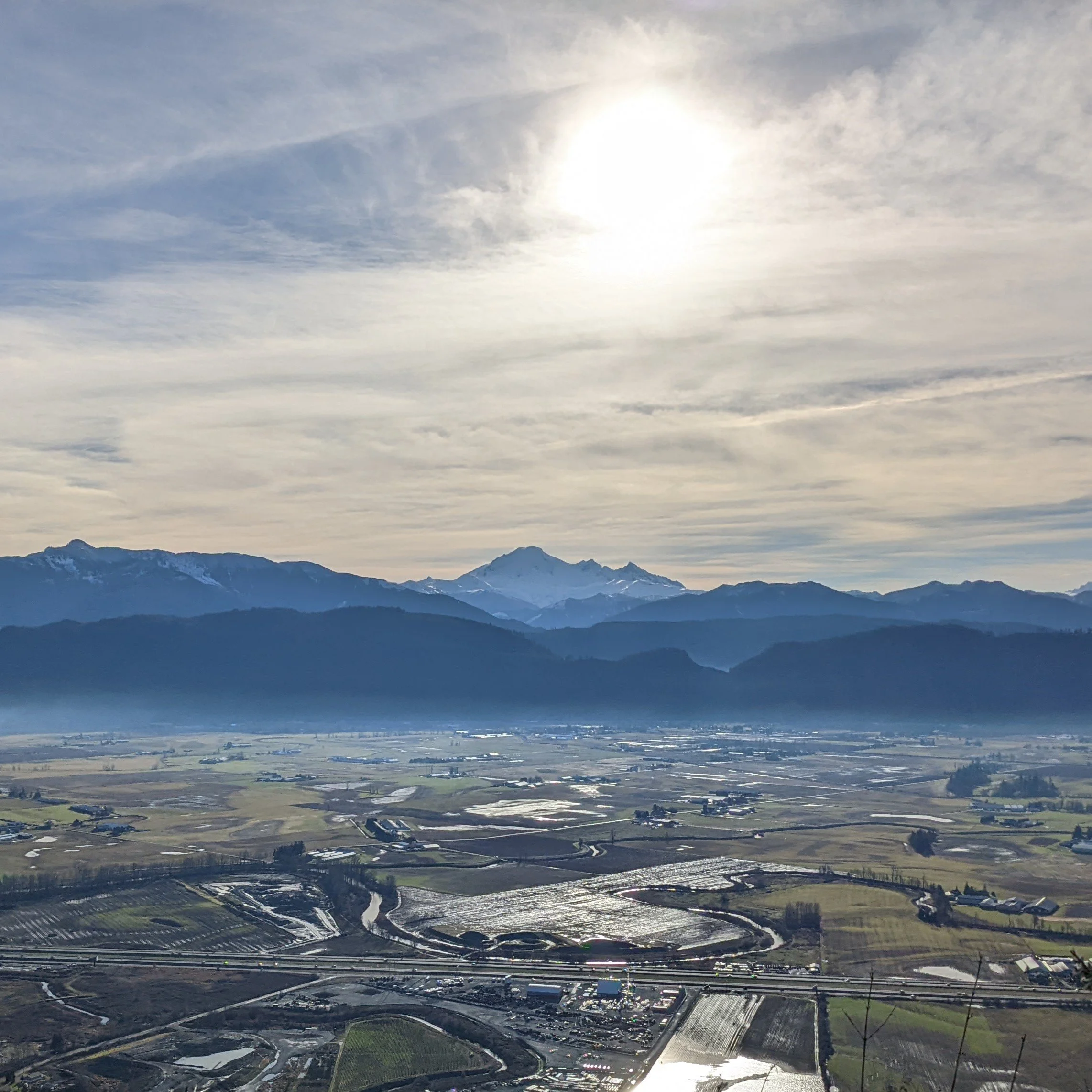
Run For Water is a 50-kilometre trail race made up of two 25K loops on Sumas Mountain here in Abbotsford. The first loop runs the course in reverse, the second runs it forward. Over the full distance, the course packs roughly 3,300 metres of climbing and descending. It’s relentlessly technical, steep in both directions, and unforgiving if your feet or ankles are even slightly off. In short, it is FUCKING HARD – one of the toughest 50K courses out there.
That mountain also has a long history with me. I’ve broken each ankle once on Sumas and badly sprained one of them another time. Three significant injuries across seven races isn’t a statistic I’m proud of, but it does demand respect. It’s a course that punishes impatience and rewards composure.
This year, Run For Water sits just three weeks before the Solstice Run. Because of that timing, its role changes. Rather than chasing an ego-driven sub-8-hour finish at all costs, the priority is to treat it as the apex of my preparation. A long, demanding day that tests pacing, fuelling, footwork, and mental steadiness without tipping into recklessness.
The official cutoff is ten hours. My intention is to approach the day with the mindset of running relaxed rather than racing, trusting that the work done beforehand will allow me to finish comfortably under that cutoff without forcing the issue. If the pace flows, it flows. If it doesn’t, that information matters more than a time on paper.
As weird as it feels, in the context of the year, Run For Water isn’t a destination, it’s a proving ground. A chance to practise restraint, durability, and self-trust on terrain that has taught me hard lessons before.
Building Capability That Carries Forward
At some point, fitness stops being the most interesting outcome of training.
Fitness is contextual. It’s specific. It shows up when conditions are right and fades quickly when they’re not. Capability is different. It’s what remains when plans change, timelines compress, or circumstances don’t cooperate.
That distinction matters more to me now than it did earlier in my career.
I’m no longer training just to be good at a particular event, distance, or discipline. I’m training to remain useful across a wide range of demands, some of which I can see coming and many of which I can’t. Long days on tired legs. Carrying fatigue without it leaking outward. Being able to move steadily when things are already uncomfortable. Having enough strength left in reserve that endurance doesn’t become fragility.
That’s why this project isn’t about chasing peak fitness for 2026 and then backing away once the calendar flips. It’s about building a body that can say yes to things that matter without requiring a long runway or perfect preparation.
Beyond the named events this year, there are always quieter possibilities on the horizon. Long days in the mountains. Multi-day efforts that aren’t races. Supporting someone else’s goal at short notice. Adventures that don’t come with a training plan or a finish line, but still demand competence.
Those moments don’t reward specialisation. They reward balance.
Strength matters because it protects structure when fatigue accumulates. Endurance matters because it buys time and patience. Recovery matters because it determines how often you can show up ready rather than merely willing. None of those qualities stand alone for very long.
What I’m aiming to build here is not a body optimised for one season, but one that stays adaptable across seasons. A body that can handle volume without becoming brittle, intensity without becoming reckless, and uncertainty without panic.
That’s what Always Ready means to me.
Not being at peak fitness year-round.
Not being impressive on paper.
But being capable enough, often enough, that when something worthwhile appears, the answer doesn’t have to be “not anymore.”
Four Weeks In, and Already Adjusting
The intention had been to publish this first article before the journey actually began. To lay out the framework, the goals, and the thinking up front, then let the weeks unfold from there.
That didn’t happen.
Life filled the gaps the way it always does. Work demands stacked up. Training weeks rolled forward. The calendar didn’t pause to wait for a clean starting line, and by the time I sat down to finish this piece, I was already four weeks into the running plan.
That feels fitting, even if it wasn’t the plan.
One of the central ideas behind Always Ready is that readiness isn’t about perfect sequencing. It’s about adapting when reality doesn’t match your intentions. In that sense, this article arriving a little late isn’t a failure of execution, it’s an early reminder of what this project is actually about.
The work doesn’t wait until everything is neatly documented. You start where you are.
On Camera, and Out of My Comfort Zone
Alongside the written pieces, I’ve also started sharing video updates as a companion to this series on my YouTube channel:
https://www.youtube.com/@CoachJPSiou (“be sure to like and subscribe”…LOL)
Those videos fall into two loose buckets.
The main Always Ready updates are intended to be the more structured, reflective check-ins, posted weekly or bi-weekly. They’re where I try to zoom out a little, summarise where things are at, and connect the dots between training, recovery, and the bigger picture.
If I’m being honest, these are the ones I’m struggling with more right now. I can feel myself trying to be too polished, too professional, and too “put together,” which often leaves them feeling a bit forced or wooden.
That camera presence isn’t a skill I have yet. I’m learning it in real time, and it may show.
The Always Ready Extras are the opposite. Some appear as “YouTube Shorts” and others as regular videos (I think that has to do with them being either over or under 3 minutes long, but not sure…I’m also sharing those on Facebook and Instagram, if that’s where you prefer to get your content). The Extras are shorter, rougher, and much more in-the-moment. They’re usually filmed mid-walk, post-run, or during whatever slice of the day I happen to be in. Less thought-out. Less filtered. Much closer to how I actually sound when I’m not trying to “present” anything.
If you’re looking for the most accurate snapshot of where my head is at on any given day, those Extras are probably it. The polished version may come with practice, but the raw version is already there. 😉
Both formats are part of the same experiment. Another way of documenting the process honestly, even when the medium itself is still a work in progress, and that, too, is part of stepping slightly outside my comfort zone this year.
Writing has always been my safer medium. I can sit with words, shape them, refine them, and choose carefully what makes it onto the page. Putting myself in front of a camera removes some of that buffer. It’s messier, less controlled, and more immediately vulnerable. There’s no edit pass for clarity of thought once the words are out of your mouth.
But that immediacy also mirrors the reality of training far better than polished summaries ever could. The videos aren’t meant to replace the writing. They’re meant to sit beside it. Another lens on the same process, captured in real time rather than retrospect.
Where We’re At…
Four weeks in, that process already looks a little different than it did on paper.
Two weeks in, I blew up my calves when I returned to stair training after a six-year absence (duh). That required an adjustment to the plans and pacing for the rest of the week, but it also required keeping a cool head and not overreacting, because I knew (from years of experience on those stairs with myself and clients) that things should be MUCH better when I returned to the stairs the next week, and they were.
I’ve now finished my first deload week from running, which in itself was difficult. After the past few years, it felt somehow wrong to walk when I could be running, and to run really easy when I could be pushing the pace.
The intention had also been to reintroduce structured strength training during that window, but early in the week I strained both forearms and elbows hauling winter wheels and tyres down into our crawlspace. Grip was painful. Holding anything with intent hurt. Given the amount of equipment I still needed to move while coaching clients that week, forcing strength work on top of that would have been stubborn rather than productive.
So I didn’t.
That decision wasn’t dramatic, and it wasn’t catastrophic. It was simply the first small adjustment in what will likely be many. The kind of decision that doesn’t show up on a training plan, but does determine whether the plan remains workable over time.
This is what the early stages of Always Ready actually look like. Progress layered with constraint. Intention meeting friction. Adjustments made quietly, without turning them into excuses or failures.
The plan still matters. So does the direction. But the work is already asking for flexibility, awareness, and restraint, which tells me this project is doing exactly what it’s supposed to do.
Early Days
This is early days.
The outline I had in my head for this year is already being rewritten by reality, and that feels like a good sign rather than a problem. If Always Ready is going to mean anything, it has to hold up when plans shift and conditions aren’t ideal.
For now, the work is simple. Keep showing up. Keep adjusting. Keep building something that lasts beyond a single season.
I’ll share what I learn along the way.