
When The Work Feels Pointless (And Why You Keep Going Anyway)
When The Work Feels Pointless (And Why You Keep Going Anyway)
There is a particular kind of tired that comes from doing the work without any clear sign that it is paying off.
Not the tired that follows a hard training session, or a long day on your feet, or even a difficult week. Those have edges you can recognise. There is soreness, fatigue, maybe a sense of earned rest. This tired feels different. It sits lower. It is quieter. It comes from repetition without reward, from consistency without applause, from effort that seems to vanish the moment you put it down.
Lately, that has been showing up for me in my business.
Week after week, I have been writing long form content, publishing it consistently, and slowly expanding into video. This was not accidental. It was a deliberate choice. The idea was simple and well supported by everything we know about organic growth and search. Publish consistently. Prioritise quality. Let the algorithms learn what you do. Give them time. Trust that momentum builds slowly, then suddenly.
And to be fair, there has been progress. Since last July, unique visitors to the site have climbed steadily month after month. Not explosively, but reliably. The graph is pointing in the right direction.
What has not happened yet is the part everyone quietly hopes for. There has been no obvious business upside. No sudden influx of enquiries. No clear moment where you think, “Ah. There it is. This is why I kept going.”
So you keep publishing. You keep refining. You add video, even though being on camera is uncomfortable and has been easy to procrastinate on for years. You do the work anyway, because you do not have the budget for paid marketing, you are not willing to compromise your message for clickbait, and you genuinely do not see a better option that aligns with who you are and how you want to show up in the world.
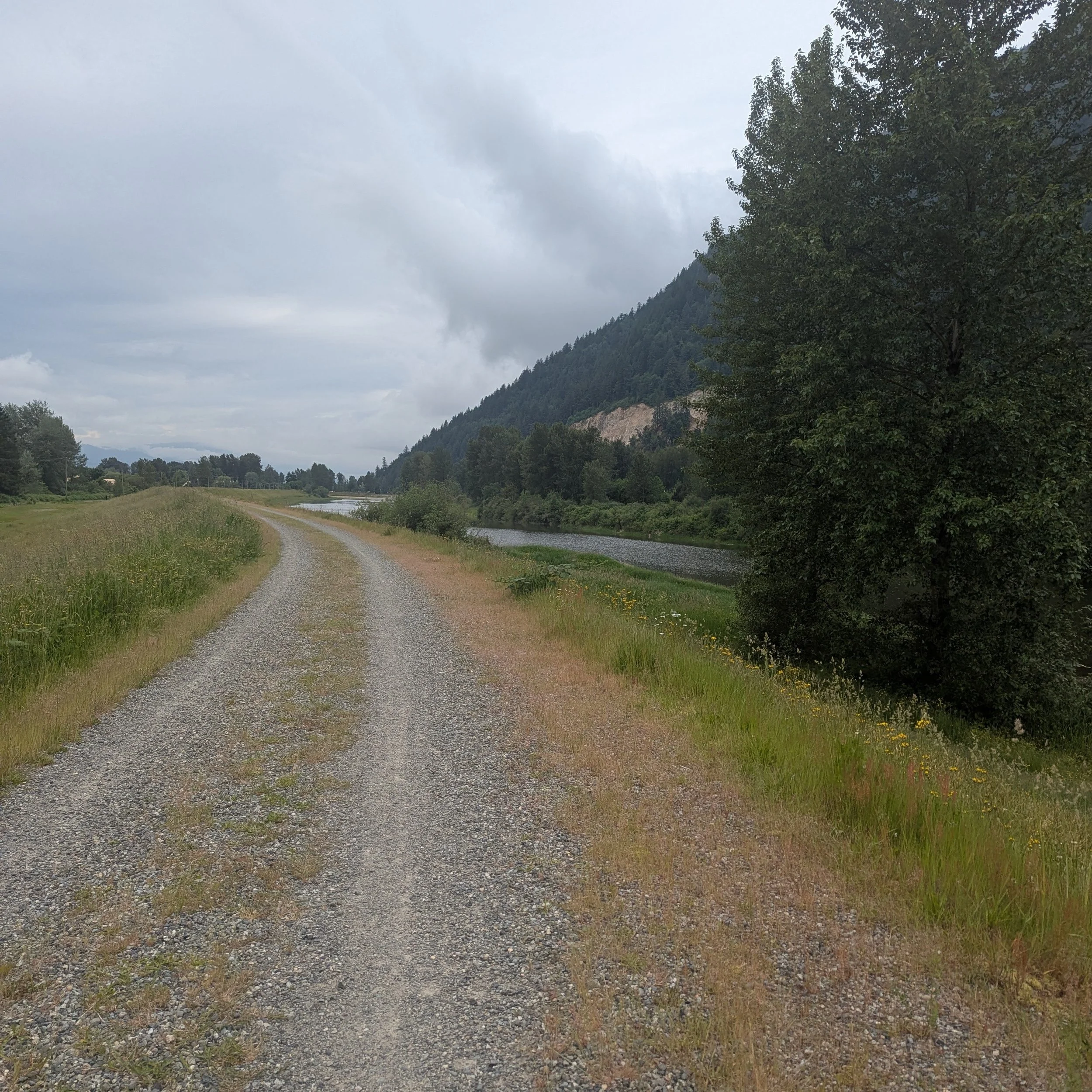
From the outside, this can look stubborn. From the inside, it feels more like quietly putting one foot in front of the other and hoping the path eventually reveals itself.
What makes this particularly interesting to me is how closely it mirrors another area of my life.
For the past couple of years, a large part of my run training has been built around long, slow, steady Zone 2 work. And to be completely honest, I hate it. Long, steady running is not fun for me. It is not exciting. It does not scratch the itch that higher intensity or the variability and fun of moving on the mountainous trails I prefer does. But it serves a purpose. It builds the aerobic engine that allows everything else to work. It creates a base that gives me freedom later, freedom to push harder, recover better, and stay durable over time.
The difference is that with running, the feedback loop is obvious. You can run the same route at the same heart rate and watch your pace improve. You can see the work paying off.
With business and content (and with long-term habit and behaviour change), that feedback is far murkier.
And that gap between effort and evidence is where doubt lives.
Progress With Feedback vs Progress Without It
One of the most important distinctions I have learned through training, coaching, and running a business is the difference between progress you can measure and progress you have to trust.
Zone 2 running is a perfect example of the first kind. It is slow. It is repetitive. It is not flashy. But it is also extremely honest. If you do the work consistently, your aerobic capacity improves. Over time, you can do the same work with less effort. Your heart rate drops at a given pace. Your pace improves at a given heart rate. The data tells the story whether you feel motivated or not.
This is why people who commit to that kind of training often develop a quiet confidence. They do not need hype. They have receipts.
Content creation, habit building, and long term behaviour change do not work that way.
The feedback loop is delayed, distorted, and often invisible for long stretches of time. You can be doing the right things consistently and still feel like nothing is happening. You can improve skills, clarity, and execution without seeing a corresponding change in outcomes. You can show up day after day and have no idea whether today mattered at all.
That disconnect messes with people.
As a coach, I see this pattern constantly in training and nutrition.
People are far more comfortable sticking with a plan when there is immediate feedback. The scale moves. The bar feels lighter. The mirror reflects something different. When that feedback disappears, adherence wobbles. Doubt creeps in. People start questioning the entire approach, even when nothing is actually wrong.
I have written about this before in different contexts, including why boring training is usually the most effective at https://www.jpsiou.com/blog/why-boring-training-is-usually-the-most-effective and why motivation is a spark, not the engine at https://www.jpsiou.com/blog/motivation-is-a-spark-not-the-engine. The common thread is always the same. The work that matters most is often the least emotionally rewarding in the moment.
The danger is not that people dislike that work. The danger is that they interpret the lack of excitement or feedback as failure.
This is where a lot of good plans die.

The Psychological Cost of Invisible Work
Doing work without validation carries a real psychological cost. It is not dramatic, but it is persistent.
There is the feeling of foolishness that creeps in when you keep showing up without a payoff. The quiet voice that asks whether you are missing something obvious. The temptation to assume that everyone else has figured out a shortcut you somehow overlooked.
In the context of business and content, this often shows up as constant second guessing. Should I change platforms? Should I change tone? Should I simplify the message? Should I do more of what seems to get attention, even if it feels misaligned? Should I scrap this entirely and start something new?
In training and nutrition, it looks almost identical. People jump from plan to plan, approach to approach, never giving anything enough time to compound. They confuse motion with progress and novelty with effectiveness.
The irony is that this behaviour is often driven by effort. These are not lazy people. They are trying. They are searching for certainty. They just cannot tolerate the ambiguity of the middle.
I struggle with this too. When the content graph moves slowly and the business impact does not follow, it is hard not to internalise that as a personal failure. Hard not to wonder whether you are simply not good enough, not savvy enough, or not built for this.
This is where perspective matters.
A lack of feedback does not mean the work is pointless. It means the system you are operating in has a long delay built into it. Search algorithms, trust, and reputation do not reward urgency. They reward consistency, relevance, and time.
The same is true for health. Bodies do not adapt on our preferred timelines. Skills take repetition. Habits take reinforcement. Foundations take longer than people want them to.
When you expect fast feedback from slow systems, you end up frustrated no matter how well you are doing.
When Stubbornness Is the Least Bad Option
If I am being completely honest, what often keeps me going right now is not some enlightened sense of inner peace.
It is stubbornness.
There is financial pressure. There is the uncomfortable feeling that I need to make something more substantial happen. There is the very real question of what all this effort has been for if it does not eventually reach enough people to matter.
At the same time, I cannot bring myself to quit. Not because quitting is inherently bad, but because I genuinely believe that this is how I add value to the world when it is done properly.
Thoughtful writing. Honest coaching. Clear, grounded guidance around training, nutrition, and mindset. Not hype. Not shortcuts. Not effortless promises.
So when I look around for alternatives, I do not see many that align with that.
This is an important distinction. There is a difference between blind grinding and purposeful persistence. Blind grinding ignores feedback and keeps pushing even when something is clearly wrong or harmful. Purposeful persistence recognises the absence of better options and chooses to stay the course while remaining alert.
Right now, staying the course feels like the least bad option.
That is not romantic. It is not inspiring. It is simply true.
And I think a lot of people find themselves here more often than they admit. In training. In health. In work. In relationships. There are seasons where you do not have clarity, only commitment. You do not have certainty, only principles. You do not have a clear exit, only forward motion.
Sometimes the only way out really is through.

Integrity As A Constraint, Not A Liability
One of the moments where pressure shows up most clearly is when you feel tempted to compromise.
In my world, that often looks like messaging. It would be very easy to promise effortless weight loss. Very easy to lean into fear, urgency, or exaggerated claims. Plenty of people do. It works in the short term.
I will not do that.
Weight loss takes work. Building fitness takes work. Changing behaviour takes work. If it were easy, everyone would do it, and no one would need coaching. Promising otherwise is not optimism, it is dishonesty.
This matters more when things are hard, not less.
When you are struggling, integrity can feel like an obstacle. It slows you down. It narrows your options. It forces you to play a longer game than you might like. But it is also what keeps your work aligned with who you are trying to be.
Throughout my coaching career, the clients who succeed long term are not the ones who find the cleverest hacks. They are the ones who build skills, tolerate discomfort, and learn to trust boring consistency. The same pattern shows up everywhere once you start looking for it.
Compromising your principles rarely fixes the underlying problem. It just creates new ones later.
Playing A Bad Hand Without Losing Yourself
One of the most damaging stories people tell themselves in these seasons is that struggle means something is wrong with them.
Sometimes you just have a bad hand.
Markets shift. Algorithms change. Life piles on stress. Energy dips. Progress stalls. None of that is a character flaw. It is reality. The question is not whether you face those moments, but how you respond to them.
Constantly pivoting and half committing to every new idea does not move you forward. Neither does digging your heels in so hard that you ignore reality. The middle path is quieter. Stay anchored to your principles. Keep doing the work that aligns with them. Remain open to better paths when they genuinely present themselves.
This applies directly to health. People who treat every setback as proof they are broken rarely stick with anything long enough to see results. People who accept that progress is uneven, but still worth pursuing, tend to fare much better over time. I explored this idea more directly in https://www.jpsiou.com/blog/you-are-not-broken-even-if-it-feels-like-it-right-now, because it comes up so often.
Integrity matters more when you are struggling, not less.
That does not mean suffering endlessly for no reason. It means refusing to abandon who you are in the hope of faster success.
The Work Still Counts
There is no neat resolution to this.
I cannot tell you that if you just keep going, everything will work out exactly as you hope. That would be dishonest. Sometimes effort does not pay off in the ways we expect. Sometimes paths change. Sometimes the lesson arrives before the outcome.
What I can say is that the work still counts.
The writing sharpens my thinking. The videos build a skill I have avoided for years. The consistency reinforces an identity I value. The same is true for the unglamorous miles in training and the unexciting meals that support health. They all build capacity, even when the payoff is delayed.
If the path you are on is not objectively wrong or actively harming you, and it still aligns with your principles, continuing is not failure. It is commitment.
You are allowed to be tired. You are allowed to feel uncertain. You are allowed to wish things were moving faster. None of that invalidates the work.
Sometimes the part of the journey you’re in really is just wading through shit to get to the other side.
If this is where you are right now, you are not alone.
You are just in the long middle.
A Clearer Picture of How Weight Loss Actually Works
If one of the reasons the work feels frustrating is that you are tired of chasing results without understanding the process, I put together a short, free mini course that breaks this down clearly and honestly.
How Weight Loss Really Works explains the mechanics behind fat loss, plateaus, maintenance, and why so many people regain the same weight over and over again. It is not a program and it is not a diet. It is a framework for understanding what is actually happening in your body, so you can make better decisions without relying on hype or guesswork.
You can learn more about it here:
https://www.jpsiou.com/how-weight-loss-really-works
Or if you prefer to jump straight in, you can sign up directly here.
If You Need a Sanity Check
If you’re reading this and thinking, “This is exactly where I am… but I still don’t know if I’m doing the right things,” that’s understandable.
One of the hardest parts of any long journey is not the effort itself. It’s the uncertainty. The wondering whether you’re being patient or just stuck. Whether you’re trusting the process or avoiding a necessary change. Whether the work you’re doing is quietly compounding or simply spinning its wheels.
That’s where a sanity check can help.
Not hype. Not motivation. Not a dramatic overhaul. Just an honest conversation to look at where you are, what you’ve been doing, and whether the path you’re on makes sense given your goals, constraints, and real life.
Sometimes the answer is, “Yes, keep going. This part just feels slow.”
Sometimes it’s, “You’re working hard, but a small adjustment would make this a lot more sustainable.”
And sometimes it’s simply reassuring to hear, “No, you’re not broken, and no, you haven’t missed some obvious secret.”
If you feel like you’ve been wading forward for a while and could use that kind of outside perspective, you’re welcome to reach out.
Even a short conversation can help bring things back into focus and take some of the weight off your shoulders.
You don’t need more noise. You don’t need another extreme plan. Sometimes you just need to know whether you’re still pointed in a direction worth walking.