
Why “Just Exercise More” Often Backfires
After talking about food intake and caloric restriction, it’s natural for the conversation to shift in a different direction.
If eating less for longer creates problems, the next instinct is usually simple:
“Fine. I’ll just move more.”
Burn it off. Add more cardio. Train harder. Sweat more.
On the surface, this feels like the healthier, more virtuous option. It avoids further food restriction. It feels active and productive. And it fits neatly into the idea that weight loss is just about balancing calories in and calories out.
The problem is that exercise doesn’t operate in a vacuum. And using it as the primary tool to force fat loss often creates a new set of problems that look suspiciously similar to the ones we’ve already discussed.
Why Exercise Feels Like the Better Answer
Exercise carries a lot of cultural weight.
We praise people for working out. We admire discipline and effort. We associate movement with health, resilience, and strength. For many people, exercise also provides stress relief, routine, and a sense of identity.
So when weight loss stalls, it feels reasonable to think that increasing activity is the responsible next step.
And to be clear, this instinct isn’t wrong.
Exercise does matter. It just doesn’t work the way most people assume it does when the goal is fat loss.

The Calorie Burn Myth
One of the biggest misunderstandings around exercise is how many calories it actually burns.
Most people dramatically overestimate their energy expenditure during workouts. Machines, apps, and wearables reinforce this by presenting inflated numbers that feel concrete and reassuring.
The reality is simpler and less satisfying.
It’s far easier to eat calories than to burn them.
An hour of effort can be undone quickly and unintentionally. Not through “cheating”, but through small changes in portion size, food choice, or post-workout hunger that don’t register as indulgent.
This doesn’t mean exercise is pointless. It means using exercise alone as a blunt calorie-burning tool is inefficient.
Compensation: The Invisible Counterbalance
When activity increases, the body responds, but not always in ways that are obvious or easy to track.
Sometimes compensation shows up as hunger. You finish a workout and feel noticeably more driven to eat. Other times it’s quieter. You move a little less for the rest of the day. You sit down sooner. You fidget less. You take the elevator instead of the stairs without thinking about it.
Portion sizes creep up slightly. Food choices become a bit more flexible. A snack that once felt optional now feels earned.
None of this usually feels like “cheating”.
That’s what makes compensation so powerful. It’s largely unconscious.
The body is constantly working to preserve balance. When you push energy output in one direction, it often pulls it back somewhere else. This doesn’t happen because you lack discipline. It happens because your nervous system is trying to maintain homeostasis.
This is why people often feel like exercise “stops working” after an initial burst of progress. Early on, increased activity can contribute to a meaningful deficit. Over time, compensation quietly erodes that gap.
From the outside, it looks like effort without results. From the inside, it feels confusing and demoralising.
But nothing has gone wrong. The body has simply adjusted.
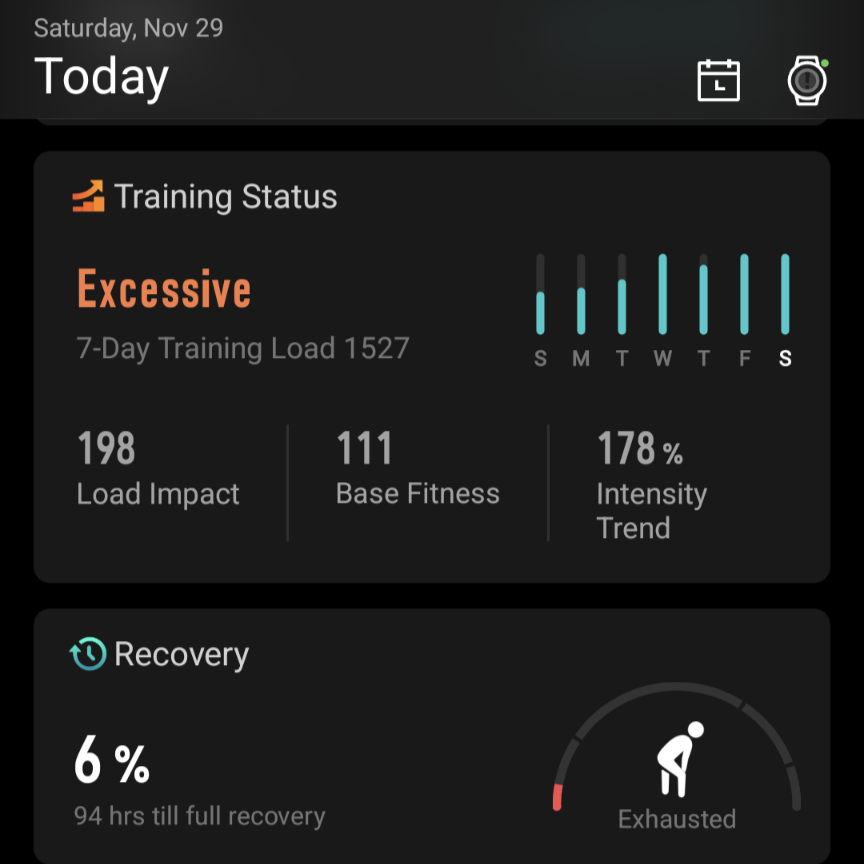
Exercise Is Also a Stressor
Exercise is stress.
That doesn’t make it bad. Stress is how adaptation happens. But it does mean exercise adds to the total load your system is carrying.
When heavy training is layered on top of an aggressive caloric deficit, limited sleep, and everyday life stress, recovery capacity gets stretched thin. Fatigue accumulates. Performance drops. Motivation fades.
This shows up faster in women and in highly driven people who are already doing “everything right”.
More exercise doesn’t happen in isolation. It happens inside a system that may already be under strain.
The Constrained Energy Model: Why More Output Doesn’t Mean More Burn
For a long time, we assumed total daily energy expenditure could simply expand to match activity.
More movement in, more calories out.
Research over the past decade suggests that isn’t how the body works.
The constrained energy model proposes that the body operates within a relatively fixed energy budget. When activity increases sharply, the body compensates by reducing energy spent elsewhere.
Non-essential processes down-regulate. Resting energy expenditure can decrease. Reproductive, immune, and recovery functions may be suppressed. Spontaneous movement drops.
In other words, total daily burn doesn’t rise endlessly. It gets constrained.
When progress slows under these conditions, it’s easy to assume something must be wrong. Training volume is higher. Steps are up. Effort feels substantial, yet fat loss stalls.
This isn’t because you’re failing or miscalculating on purpose. It’s because the body adjusts to higher activity by conserving energy elsewhere. The rules haven’t changed, but the context has. Output isn’t scaling the way it did early on, even though the work feels harder.
Trying to solve that by simply adding more exercise usually accelerates fatigue and compensation rather than restoring progress. Just as the body adapts over time to prolonged dieting, it can adapt very quickly to excessive exercise because it represents an immediate threat to homeostasis.

Why “More Cardio” Stops Working So Quickly
There’s another layer to this that often gets overlooked: most cardio activities become more efficient the more you do them.
Walking, running, cycling, rowing — as skill improves, movement becomes smoother and less costly. You waste less energy. Your body learns how to do the same work with fewer calories. This is a good thing for performance, but a problem if your only goal is calorie burn.
Over time, the same workout produces a smaller metabolic effect. To achieve the same burn, you have to go longer, harder, or more often. That increases fatigue, time commitment, and recovery demands.
So cardio adapts in two ways at once:
The body constrains total energy expenditure
The activity itself becomes cheaper to perform
The body doesn’t just rein in output. It learns to do the work more efficiently.
This is why endless cardio often becomes a losing game.
Muscle Loss, Metabolism, and the Long Game
One of the biggest hidden risks of relying heavily on exercise to drive weight loss, especially alongside aggressive calorie restriction, is muscle loss.
When energy availability is low and training volume is high, the body looks for ways to reduce its ongoing energy demands. Muscle tissue is metabolically active. It costs energy to maintain. Under sustained stress, it becomes negotiable.
This matters more than most people realise, because muscle isn’t just about strength or appearance. It plays a key role in metabolic health, insulin sensitivity, physical resilience, and long-term calorie needs. Losing lean mass lowers the amount of energy your body requires to function day to day.
That means future fat loss becomes harder, not easier. Maintenance becomes more fragile. The same intake that once supported your body now pushes weight upward more easily.
There’s also a quality-of-life cost. Less muscle means less strength, poorer recovery, and a greater risk of injury as activity levels rise.
This is why strength training and adequate protein intake are so important in any sustainable fat-loss plan. Preserving muscle protects your metabolism, your performance, and your ability to keep results long after the dieting phase is over.

Why Exercise Alone Rarely Produces Meaningful Weight Loss
Exercise is excellent for health. It improves cardiovascular fitness, insulin sensitivity, mood, sleep, and long-term disease risk.
What it doesn’t reliably do on its own is produce large, lasting weight loss.
When people pour effort into exercise and don’t see the scale respond, they often feel betrayed. The effort feels real. The sweat is real. The results don’t match expectations.
The problem isn’t that exercise failed.
It’s that exercise was asked to do a job it isn’t well suited for on its own.
What Exercise Is Actually Best At
Exercise is incredibly valuable, just not in the way it’s most often sold.
Its greatest benefits don’t come from how many calories it burns in a single session. They come from how it changes the body over time.
Exercise helps preserve lean muscle during weight loss. It improves insulin sensitivity and metabolic health. It supports better sleep, better mood, and greater stress tolerance. It builds physical confidence and capability.
When food intake is appropriate, exercise also increases energy flux, allowing people to eat more while maintaining weight, which is a far more comfortable and sustainable place to live.
Perhaps most importantly, exercise supports who you are, not just what you weigh. It builds a body that feels capable, resilient, and useful. That matters far beyond the scale.
Used well, exercise reinforces progress. Used poorly, it becomes punishment or compensation.
The difference isn’t effort. It’s intent and context.
Exercise works best as a support system for fat loss, not as a correction tool for a broken plan.

Putting the Pieces Together
Eating less for too long backfires. Exercising more to compensate often backfires too. The body adapts to both.
Sustainable fat loss comes from coordination, not escalation. It’s about applying the right amount of stress, at the right time, for the right reason.
When Effort Turns Into Escalation
Weight loss isn’t about pulling harder on one lever. It’s about understanding how all the levers interact, and recognising when more effort in the same direction is no longer producing better results.
This is where many people get stuck. When progress slows, the instinct is to push. Train more. Add cardio. Be stricter. What starts as commitment quietly turns into escalation, even as fatigue rises and returns diminish.
Physiology explains why this happens. But what determines whether it becomes a long-term problem is how people respond to that friction.
In the next lesson, we’ll shift focus to that response. We’ll look at the all-or-nothing mindset that turns normal setbacks into overcorrections, and why learning to adjust calmly matters just as much as understanding nutrition or training if you want progress that actually lasts.
Enjoying This? There's More To Explore.
If you've found this lesson helpful, How Weight Loss Really Works is a free email series that explores the principles behind sustainable weight management, why so many approaches fall short in real life, and how to think differently about making lasting changes.
Sign up to receive the complete series, one lesson at a time, delivered to your inbox:
Click Here To Get The Free Email Series
Already receiving the series? You're all set! Your next lesson will arrive in your inbox tomorrow.